
Enterprise AI Procurement: Where to Start
Enterprise AI procurement is different from traditional ICT procurement.
Organisations are increasingly evaluating AI platforms, developing AI strategies and navigating a rapidly evolving vendor market, sometimes while their internal evaluation and governance frameworks are still developing.
This page provides a structured navigation hub for enterprise AI procurement insights published across this site. The content is intended to support research and informed decision-making rather than provide organisation-specific advice. Given the complexity of enterprise AI and the pace at which the market evolves, organisations should obtain professional advice tailored to their specific commercial, legal, technical and security requirements before making significant procurement or implementation decisions.
Who This Is For
This blog is designed for:
- People curious about Enterprise AI Procurement
- Procurement and sourcing teams
- CIOs, CTOs, and technology leaders
- Finance and commercial teams
Exploring Enterprise AI Procurement
Enterprise AI procurement covers a broad range of commercial, technical, governance and implementation considerations. Organisations often begin from different starting points depending on their objectives, existing capabilities and stage of AI adoption.
Rather than following a single prescribed process, this page brings together articles covering the major topics commonly encountered throughout the enterprise AI procurement lifecycle. The content is grouped into key pillars to make it easier to navigate related subjects and explore areas of interest.
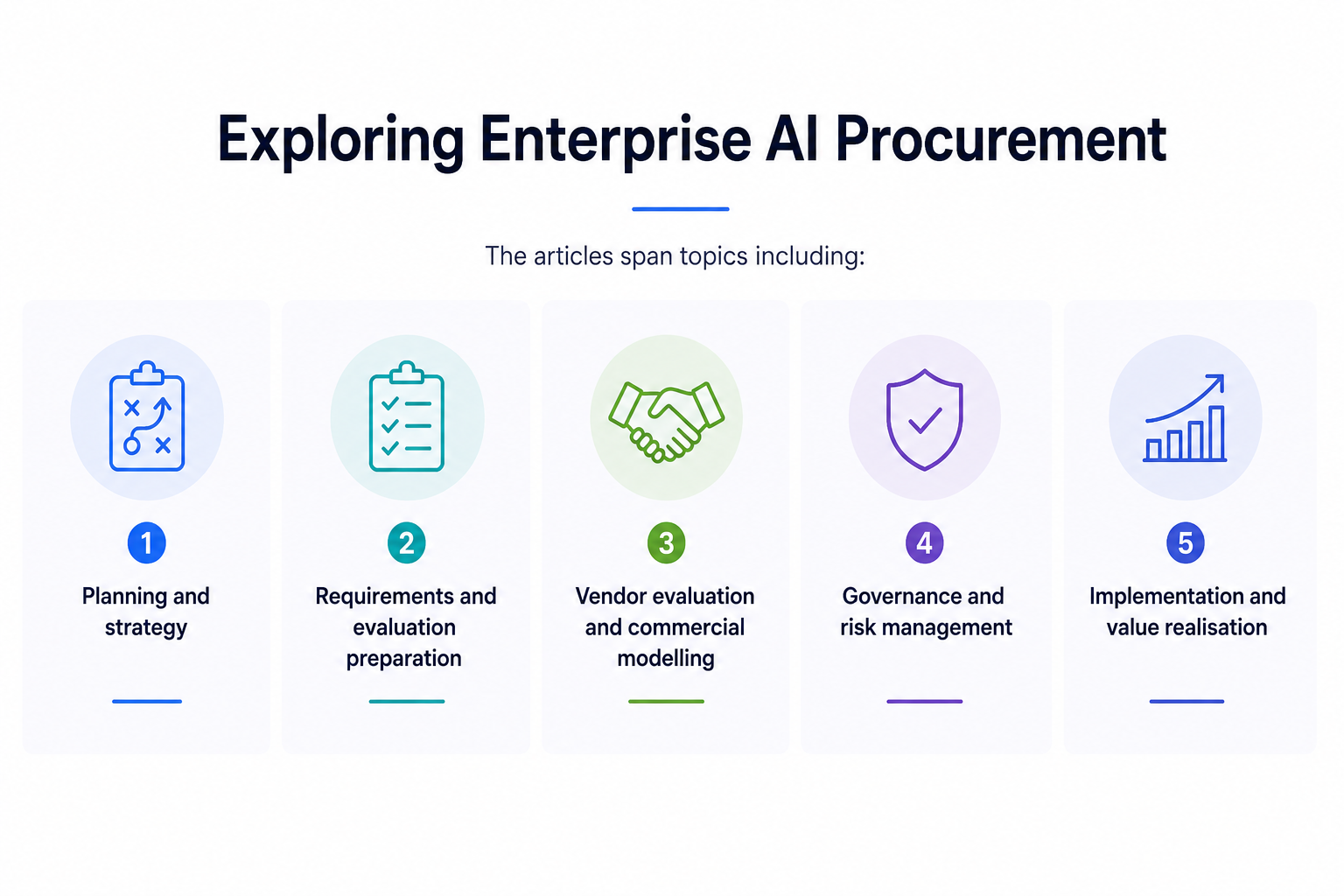
The articles span topics including:
- Planning and strategy
- Requirements and evaluation preparation
- Vendor evaluation and commercial modelling
- Governance and risk management
- Implementation and value realisation
While many organisations encounter these topics in different sequences, grouping them into these pillars provides a practical way to navigate the content available across this site.
Jump to:
- Planning and Strategy
- Requirements and Evaluation Preparation
- Vendor Evaluation and Commercial Modelling
- Governance and Risk Management
- Implementation and Value Realisation
1. Planning and Strategy
How organisations may define the procurement approach, build the business case, and decide whether to build or buy.
Core Guides
- Enterprise AI Procurement Guide: A Decision Framework for First-Time Buyers
- Enterprise AI Procurement in Australia: Market Structures and Procurement Considerations
- Building the Internal Business Case for Enterprise AI
- Enterprise AI Build vs Buy: Considerations Before Vendor Evaluation
Supporting Articles
- Enterprise ICT Procurement in Australia: The AI Inflection Point
- How AI Is Reshaping Enterprise ICT Procurement Decisions
- Enterprise AI Sourcing: Common Challenges in Early Evaluation and Scoping
- Enterprise AI Procurement: Why Enterprise AI Challenges Traditional ICT Procurement Models
- Consumer AI Tools and Enterprise AI Strategy: Understanding the Differences
2. Requirements and Evaluation Preparation
What is commonly defined internally before going to market. Organisations may encounter implementation or governance challenges where these areas are not clearly defined.
Enterprise AI Procurement: Requirement Definition Before Vendor Evaluation
Foundations
- Enterprise AI Use Case Definition: Distinguishing Genuine Workflows from Demo-Driven Theatre
- Enterprise AI Implementation Planning and Go-Live Readiness
- Enterprise AI Pilot Design: Building Evaluations That Support Defensible Decisions
Architecture
- Knowledge Graph vs LLM vs RAG: Architecture Considerations in Enterprise AI Procurement
- Enterprise AI Connector and Data Access Requirements: Defining Integration Scope Before Vendor Engagement
- Enterprise AI Procurement: System Integration Requirements, Connectors and Hidden Costs
Requirements Definition
- Non-Functional Requirements for Enterprise AI: Considerations for Australian Organisations
- Enterprise AI Non-Functional Requirements Part 2: Enterprise Readiness, Governance, and Transition Rights
3. Vendor Evaluation and Commercial Modelling
Analysis of how organisations may evaluate enterprise AI platforms, structure RFPs, compare vendor approaches, and assess pricing and total cost of ownership..
Enterprise AI Pricing vs Total Cost of Ownership: A Procurement Overview
Core Guides
- Enterprise AI Vendor Evaluation: Designing Structured Scorecards
- Enterprise AI Pricing vs Total Cost of Ownership: A Procurement Overview
- The Hidden Costs of Enterprise AI: Cost Areas Often Overlooked During Planning
RFP and Evaluation
- Enterprise AI RFP Structures and Template Considerations for Australian Procurement Teams
- The Enterprise AI RFP Blueprint: Sections, Weightings, and Gating Criteria for Australian Organisations
- Enterprise AI Platform Evaluation: Criteria and Assessment Considerations
- Reference Checks in Enterprise AI Procurement: Common Gaps and Evaluation Considerations
Pricing Models
- The Vendor Shift From Per-Seat to Consumption Pricing: What It Means for Enterprise AI Cost Modelling
- Fixed to Variable: Agentic AI and Shifting Enterprise Cost Structures
- Enterprise AI API Pricing: Token Cost Modelling and Budget Considerations
- Enterprise AI Unit Economics: How to Measure, Benchmark, and Reduce AI Costs
Budget Controls and Commercial Risk
- Enterprise AI Spend Caps and Budget Controls: Token Limits, Rate Tiers, and Cost Containment Approaches
- Enterprise AI Exit Costs: Switching Vendors and Transition Considerations
- Enterprise AI ROI: Measurement Approaches for AI Investments
4. Governance and Risk Management
How organisations manage AI risk, accountability, model lifecycle, and operational controls.
AI Governance for Australian Enterprises: Procurement and Implementation Considerations
Core Guides
- AI Governance for Australian Enterprises: Procurement and Implementation Considerations
- Enterprise AI Governance Frameworks: An Overview for Australian Organisations
Operating Model
- Enterprise AI Governance Structure: Roles and Responsibilities
- AI Governance for Enterprise Model Lifecycle Management
- The Cost of Enterprise AI Governance: Cost Components and Budget Considerations
Emerging Risk
5. Implementation and Value Realisation
How AI may be embedded into workflows, and common approaches to supporting adoption, measuring outcomes and improving value realisation after deployment.
Enterprise AI Change Management in Australian Organisations: Implementation Considerations
Core Guides
Adoption
- Workflow Redesign for Enterprise AI: An Overview for Procurement Teams
- Enterprise AI Training Design: Procurement Considerations and Common Approaches
- Enterprise AI Superuser Programmes: Structure, Resourcing, and Operational Considerations
Measurement and Value
- Measuring Enterprise AI Adoption Beyond Licence Activations
- Enterprise AI Value Realisation: How Organisations Extract ROI After Go-Live
- Enterprise AI Value Realisation After Go-Live: Measuring Outcomes Post-Deployment
This article provides general commercial and procurement commentary only and does not constitute legal, financial, or professional advice.